
What I Notice at a Hungarian Piac That I Rarely See in America
I’ve been spending a lot of time in Hungary lately, and some of the things that stay with me most aren’t the castles, the vineyards or even the places you’d necessarily find on a travel itinerary. Sometimes, it’s something as ordinary as walking through the piac on a Thursday morning.
Piac simply means market in Hungarian, but calling it a farmers market doesn’t quite capture it. At least not the way I think of farmers markets in the United States, where they’re often limited to a few hours on a Saturday morning. Here, the market is part of the weekly rhythm in a much more regular way. You don’t have to organize your entire Saturday around getting there before everything closes. There are more opportunities to stop in, buy what you need and keep moving through your day.
That difference changes the feeling of it. The piac doesn’t feel like an event. It feels like part of life.
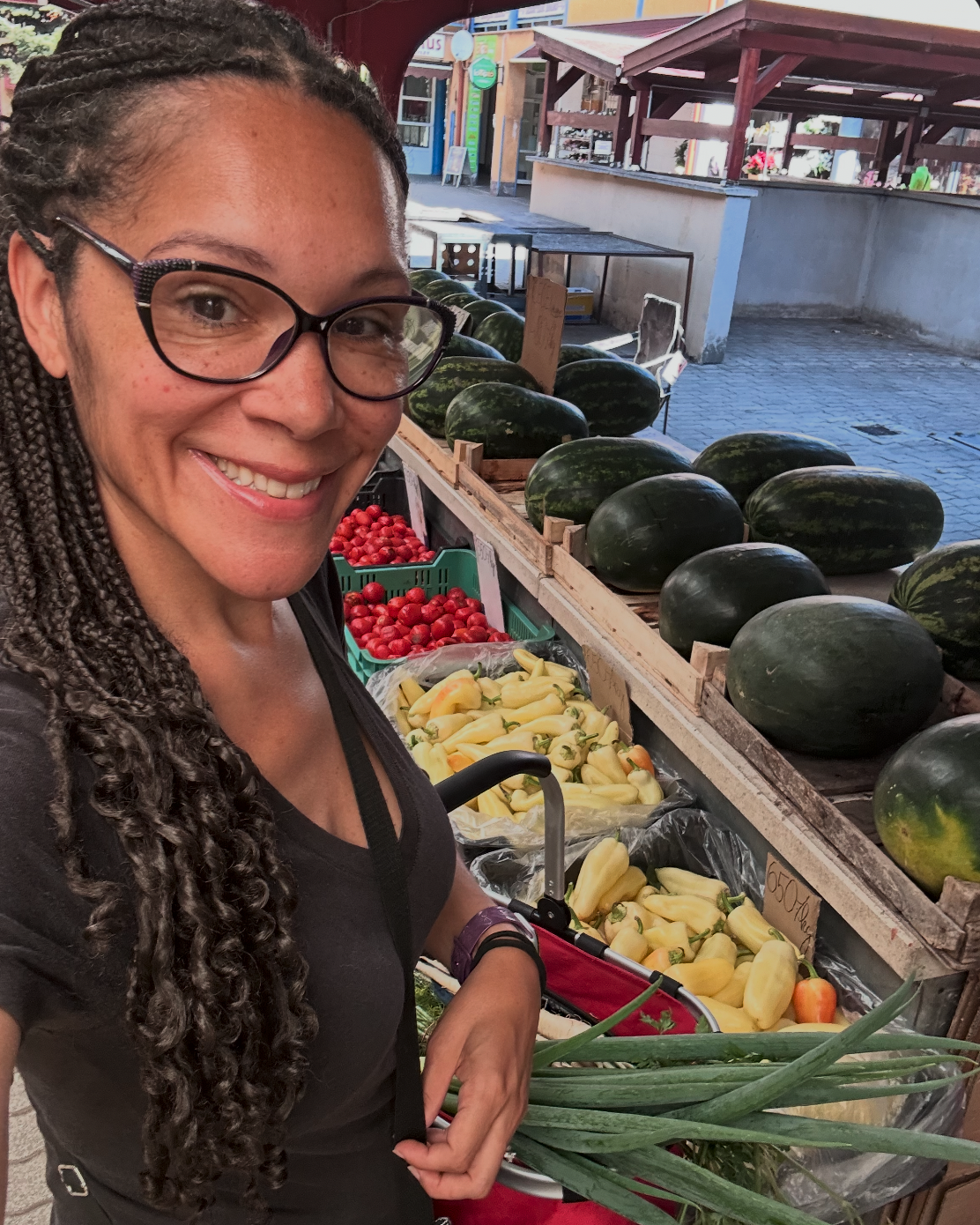
A Thursday morning at the local Hungarian piac
People arrive, and many of them are walking to and from the market rather than driving there, filling a car and heading home. You see people leaving with produce tucked into woven baskets or bags, while others simply carry what they bought home in their hands. They’re bringing home tomatoes, peppers, onions, potatoes, cabbage, all kinds of fruit, eggs, cheese, meat, honey, bread or whatever happens to be abundant that week.
There are no elaborate displays telling you how healthy everything is because they aren’t necessary.
The food mostly looks like, well, just food.
The produce isn't trying to be perfect
One of the first things I notice is how unapologetically imperfect everything can be. Tomatoes come in different sizes and colors. Peppers curve in strange directions. Beets still have dirt on them. A bunch of carrots might look like it was pulled from the ground that morning because, quite possibly, it was. And in its own way, that makes it perfect.
There is something refreshing about that. In the US, we’ve become accustomed to produce being remarkably uniform. We expect apples of similar size, perfectly shaped peppers and vegetables polished enough to look almost decorative.
At the piac, appearance seems secondary to how something tastes and what you’re going to do with it. People seem to know what they’re buying and how they’ll use it. They aren’t necessarily choosing ingredients just because a recipe told them to. They’re buying familiar foods, often from familiar vendors, to make dishes they already know how to make.
Seasonality isn't a marketing concept here
Another thing becomes obvious very quickly: you can tell what time of year it is by looking at the tables.
When something is in season, it is everywhere! Piles of peppers. Boxes of tomatoes. Watermelons. Stone fruit. Grapes. Then the selection begins to change.
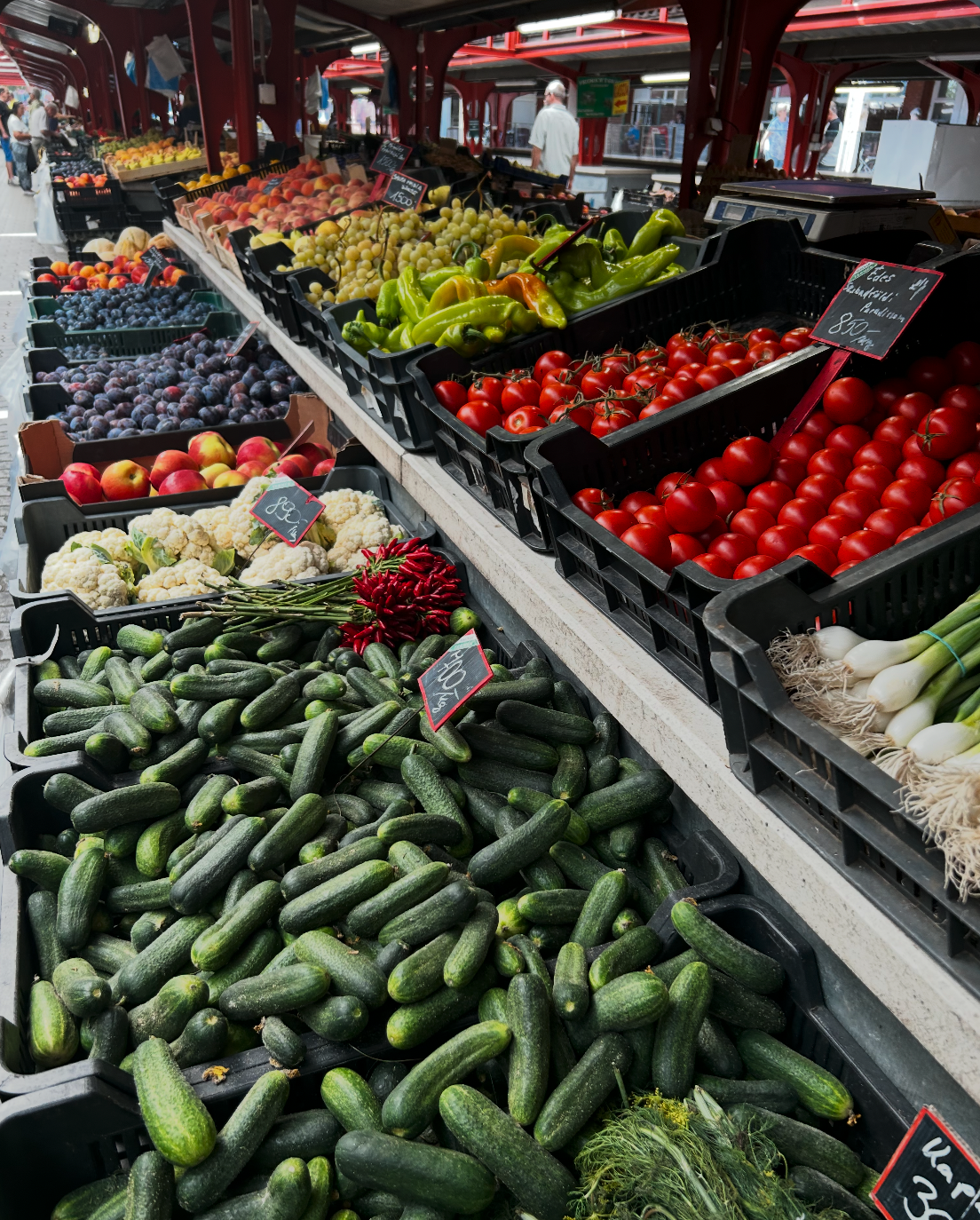
What’s in season takes over the tables.
That sounds simple, but it feels increasingly unusual when you come from a food system where we expect almost everything to be available almost all the time. Modern supermarkets have largely disconnected us from seasonality. Strawberries in winter? Sure. Tomatoes year-round? Of course. Produce flown thousands of miles because we decided availability should have very little to do with geography or season? Completely normal.
The piac quietly reminds you that food has a rhythm, and there is something satisfying about eating within it. That anticipation of the season is part of the process.
There is much less packaging
This might be one of the biggest contrasts. So much of the food is simply sitting there. As food.
Vegetables aren't sealed inside plastic trays. Fruit isn't portioned into containers. Herbs aren't tucked into little plastic boxes. You pick out what you want, someone weighs it, and it goes into your basket.
That's it.
It makes me realize how much packaging surrounds food in the States, even foods that never really needed packaging in the first place. And once you start noticing it, it's difficult to stop.
People are buying ingredients, not solutions
This may be the observation I keep coming back to. At the piac, most of what I see people carrying home requires them to do something with it.
The cabbage needs to be chopped. The potatoes need to be cooked. The peppers need to become part of something. The meat isn't already a complete dinner, and the vegetables don't come with a sauce packet and instructions to microwave them for three minutes.
These foods still require participation.
As a functional medicine doctor, I could easily turn this into a conversation about ultra-processed foods, fiber, blood sugar or nutrient density. All of those things matter, but I think there is a bigger cultural observation here.
Convenience has gradually removed us from the process of feeding ourselves. We don't just have convenient foods anymore. We have foods designed so that almost nothing is required of us: no chopping, no washing, no planning, no connection, sometimes not even a plate.
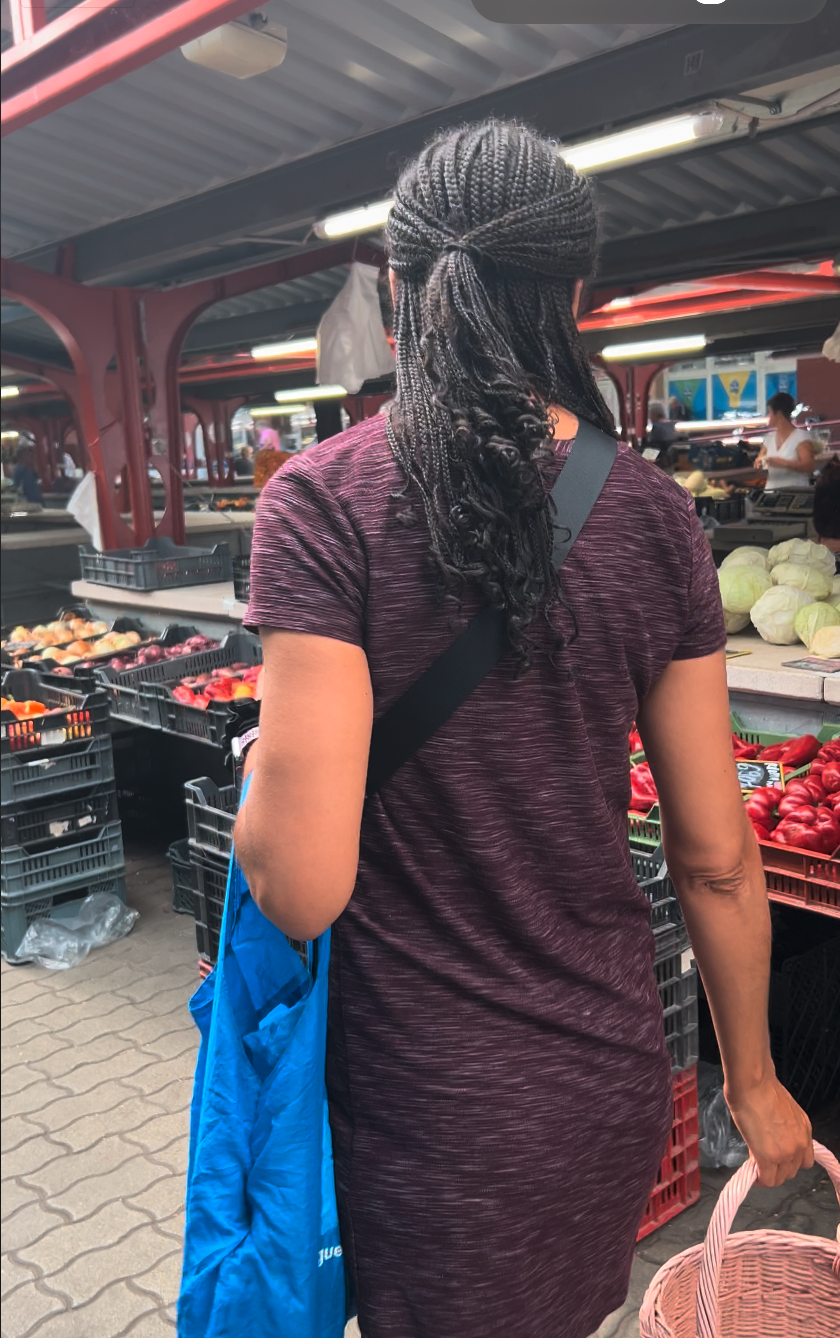
Shopping here still feels like part of the day.
Walking through a Hungarian piac reminds me that preparing food used to simply be part of the day. Not a wellness practice. Not meal prep. Not something you needed to optimize.
Just life.
Food is also conversation
There is another kind of exchange happening at the market that has nothing to do with money.
People talk. They ask questions. Vendors explain things. Someone runs into someone they know. Conversations happen over piles of peppers, bags of potatoes and baskets of fruit. Even when my Hungarian isn't good enough to understand every word, the rhythm is obvious.
Buying food is social. The piac is connection.
That may be one of the greatest things we've lost as food has become increasingly efficient. Efficiency gets us through the checkout line faster, but it doesn't necessarily make us more connected.
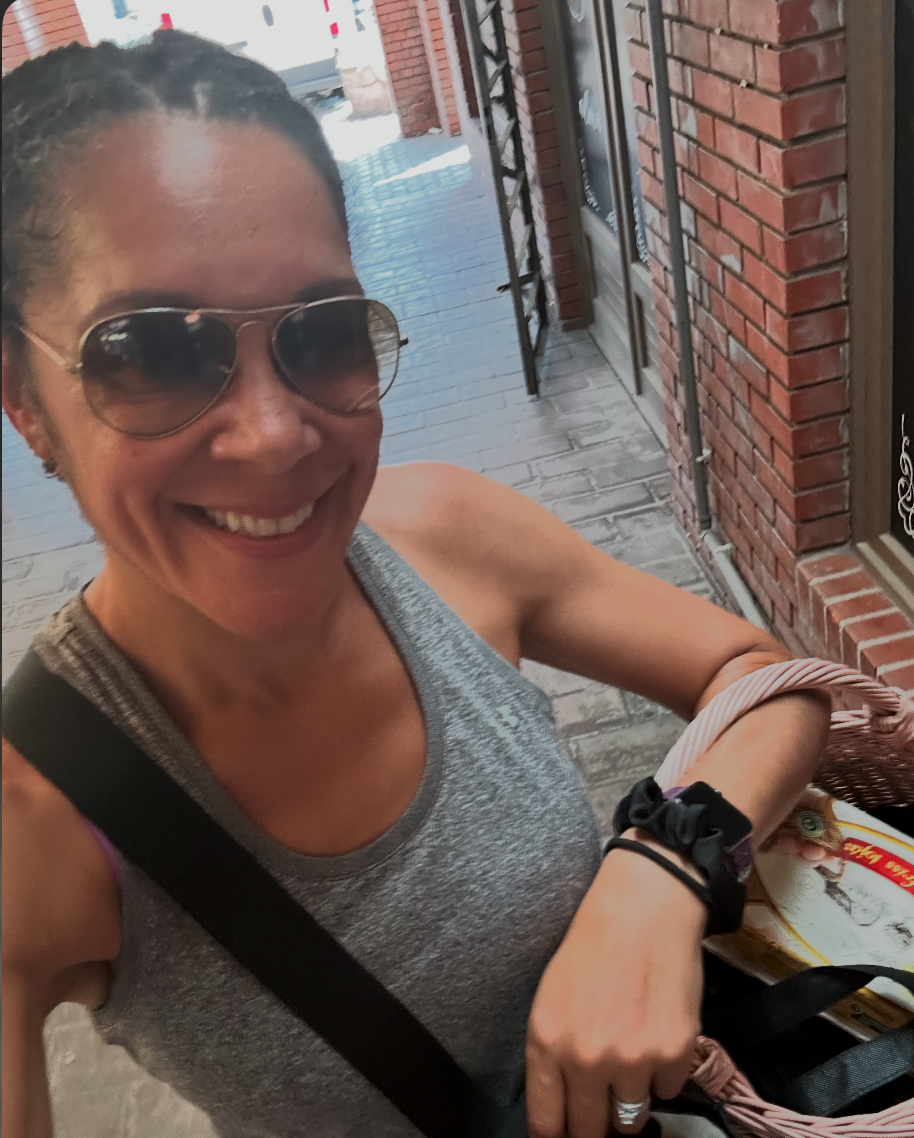
Heading home from the piac.
And there is something about watching people walk home afterward, baskets in hand or groceries simply carried in their hands, that makes the entire process feel integrated into daily life in a way I rarely experience in America. The shopping itself becomes movement, routine, connection and food preparation all tied together.
I'm not suggesting we all move to Hungary
I don't romanticize everything I see when I travel. Hungary has convenience foods, supermarkets, packaged snacks, fast food and plenty of the same modern pressures that exist elsewhere. The US also has wonderful farmers, local markets and communities doing this kind of work incredibly well.
What travel does, though, is make it easier to notice what has become “normal” at home and also what convenience culture has quietly omitted. Sometimes another culture doesn’t show us a completely different way of living so much as remind us of habits we once treated as ordinary: buying what is growing or growing it ourselves, cooking with what we have, talking to the person selling us our food and carrying groceries home because that is simply part of the day.
None of that is revolutionary, and maybe that is exactly why it stands out to me. The longer I spend in Hungary, the more I find myself paying attention not only to what people eat, but to everything that happens before food reaches the plate. On a Thursday morning at the piac, those small routines reveal a lot about how food, movement, community and daily life can still exist together without being turned into a wellness trend.
Follow my Field Notes and travels IG @anya_szigeti.